Pencil Coquette Bow Patterns Papers: A Strategic Asset for Modern Creative Workflows
In the landscape of digital asset management and creative production, the difference between a mediocre output and a professional-grade result often lies in the details. Pencil Coquette Bow Patterns Papers represents more than just a collection of decorative images; it is a functional resource designed to streamline the visual execution phase of diverse projects. For professionals ranging from stationery designers to classroom educators, integrating high-quality patterned papers into your workflow is a strategic decision that enhances consistency, reduces production time, and elevates the perceived value of the final deliverable.
The aesthetic known as "coquette" has gained significant traction in recent years, characterized by soft curves, delicate ribbons, and a romantic, feminine touch. When this style is rendered with a pencil-sketch texture, it offers a unique versatility that fits seamlessly into both modern digital interfaces and traditional print media. Understanding how to leverage these assets effectively requires a shift in perspective: viewing them not merely as decorations, but as foundational elements of a broader design process.
Defining the Asset Within the Design Ecosystem
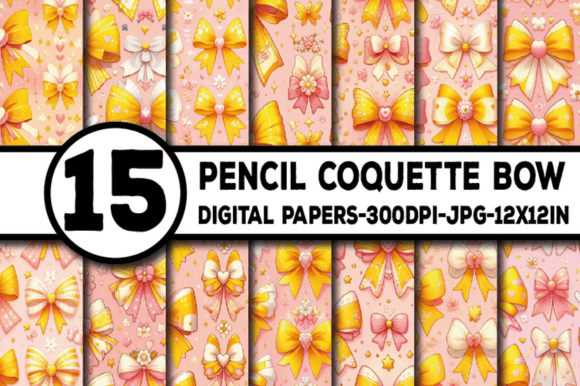
To utilize Pencil Coquette Bow Patterns Papers effectively, one must first understand the technical specifications and their implications for various workflows. The package provided is a ZIP folder containing 15 distinct designs, each rendered at a high resolution of 300 DPI. This specification is critical for anyone involved in print production or high-fidelity digital display.
A 300 DPI standard ensures that when these patterns are applied to physical products like gift wrapping, posters, or fabric swatches, the image remains crisp without pixelation. For digital creators working on planner stickers or invitations, this resolution allows for flexible scaling. You can resize elements within your design software without compromising quality, which is essential for maintaining brand consistency across different mediums. The inclusion of JPEG files simplifies compatibility, allowing immediate integration into popular design platforms such as Canva, Adobe Photoshop, Illustrator, or Procreate without the need for complex conversion processes.
Pre-Production: Planning and Conceptualization
The utility of these patterned papers begins long before the actual creation of the final product. During the planning phase, visual assets serve as mood board components that help stakeholders visualize the end goal. If you are a small business owner launching a new line of stationery, having access to 15 variations of coquette bow patterns allows you to present multiple concepts to clients or team members early in the process.
This preparation stage is about establishing a cohesive visual language. By selecting specific patterns from the set, you can define the tone of a project. For instance, a softer, sketchier pattern might be chosen for a wedding invitation suite, while a bolder, denser bow pattern could serve as a background for a classroom poster. The ability to preview these textures helps in making informed decisions regarding color palettes and typography pairing before any heavy lifting occurs. This proactive approach minimizes the risk of costly revisions later in the production cycle.
Implementation Across Diverse Professional Verticals
The true power of Pencil Coquette Bow Patterns Papers lies in its adaptability across different industries and use cases. Below are practical scenarios where these assets integrate directly into existing workflows to enhance efficiency and output quality.
- Stationery and Paper Product Design: For entrepreneurs creating journals, notebooks, or greeting cards, these patterns provide an instant thematic backbone. Instead of designing intricate bow illustrations from scratch, designers can apply these high-resolution backgrounds to create textured covers or interior page dividers. The 12 x 12 inch size is particularly convenient for standard layout grids, allowing for easy tiling or cropping to fit specific dimensions.
- Classroom Decor and Educational Materials: Educators constantly face the challenge of creating engaging learning environments. These patterns are ideal for transforming plain bulletin boards, student planners, or worksheet headers into visually stimulating resources. A teacher preparing a unit on literature might use the pencil-style bows to frame character analysis charts, adding a layer of whimsy that captures student interest without overwhelming the text. The consistent quality ensures that materials printed in bulk look uniform and professional.
- Digital Products and Planner Stickers: In the booming market of digital organization tools, aesthetic appeal drives sales. Creators of GoodNotes templates, Notion dashboards, or printable planners can use these JPEG files to create sticker packs or decorative elements. The high DPI allows for clean cutting paths if using die-cut machines, ensuring that digital stickers look sharp when printed at home or through fulfillment services.
- Event Planning and Party Invitations: For freelancers organizing events or designing invitations, speed and elegance are paramount. These patterns can be used to create custom envelopes, RSVP cards, or table numbers. The coquette theme lends itself well to bridal showers, baby showers, and birthday celebrations, offering a sophisticated yet playful vibe that resonates with adult audiences aged 20–50.
- Fabric and Textile Design: While primarily digital, these patterns can be licensed or utilized for textile printing. Designers can repeat the 12 x 12 inch tiles to create seamless fabrics for clothing, quilting, or home decor items. The pencil texture adds a handcrafted feel that is highly desirable in the current market for artisanal goods.
Workflow Integration and Technical Considerations
Integrating Pencil Coquette Bow Patterns Papers into your daily routine requires attention to file organization and compatibility. Upon receiving the ZIP folder, the first step should be extraction and categorization. Create a dedicated project folder structure that separates raw assets from final exports. This practice prevents accidental overwriting and ensures that you always have access to the original 300 DPI source files.
When working in design software, consider the file format's limitations. Since the assets are provided as JPEGs, they are raster-based. This means they are best suited for background textures, overlays, or flattened images rather than vector manipulation. If you require scalability beyond the original resolution, you may need to trace the outlines using vector tools, though the pre-defined 12 x 12 inch size usually suffices for most applications. For digital products, ensure you export your final designs in formats compatible with your target platform, such as PNG for transparency support or PDF for print-ready documents.
Efficiency is further improved by establishing templates. If you frequently produce classroom posters or social media graphics, save the 15 patterns as presets or background layers in your design software. This allows you to switch themes instantly, reducing the repetitive task of re-importing files. Consistency in application is key; once a pattern is selected for a brand identity or series, stick to it to build recognition. Mixing too many disparate styles can dilute the message, so curate your selection carefully.
Quality Control and Long-Term Value
Maintaining high standards is non-negotiable in professional creative work. Before finalizing any project that utilizes these patterns, perform a quality control check. Zoom in to verify that the edges are clean and that the pencil texture does not appear muddy when scaled down. Check for color accuracy, especially if the project involves branding guidelines that require specific hex codes or color profiles.
From a long-term perspective, investing in a versatile asset pack like this pays dividends. Unlike trends that fade quickly, the coquette aesthetic has demonstrated staying power due to its emotional resonance. By building a library of these patterns, you create a reusable inventory that can be tapped for future projects, whether it is a seasonal marketing campaign or a personal hobbyist endeavor. This reduces the need for constant new purchases and fosters a sustainable creative practice.
Furthermore, the flexibility of the 15-design set allows for A/B testing in marketing contexts. You can deploy different pattern variations to see which resonates better with your audience, gathering data to refine your visual strategy. Whether you are a marketer analyzing click-through rates on email newsletters featuring these designs or a blogger enhancing their website's visual hierarchy, the data gathered from these implementations informs future creative decisions.
Conclusion on Practical Application
Pencil Coquette Bow Patterns Papers serves as a bridge between conceptual creativity and tangible execution. It removes the friction associated with sourcing high-quality, thematic assets, allowing creators to focus on the core objectives of their projects. By understanding the technical capabilities of the 300 DPI JPEG files and applying them strategically within workflows—from initial planning to final production—professionals can achieve polished results with greater efficiency. Whether decorating a classroom, wrapping a gift, or designing a digital storefront, these patterns offer a reliable foundation for bringing ideas to life with elegance and precision.