Rusty Metal Seamless Patterns
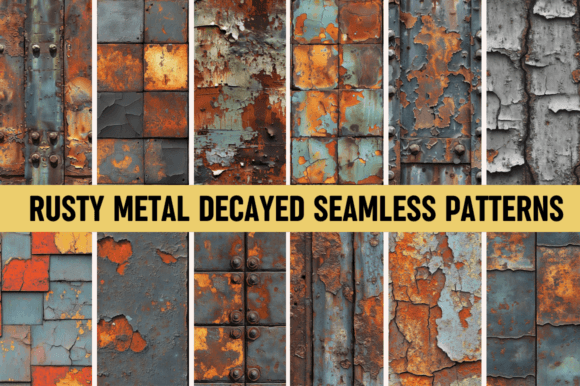
When you are looking to inject a sense of history and raw grit into a project, Rusty Metal Seamless Patterns offer more than just a visual texture; they provide an immediate emotional connection. This collection is not merely about corrosion or decay; it is about capturing the authentic narrative of weathered surfaces that have stood the test of time. By introducing our Rusty Metal Decayed seamless patterns, we are providing creators with a tool to bring rugged authenticity to their work without needing to photograph a scrapyard themselves.
These patterns showcase intricate details of peeling paint, deep oxidation, and the unique textures formed by years of exposure to the elements. The seamless nature of these assets ensures that when you tile them, there are no visible breaks or repeating artifacts. This continuity is crucial for professional-grade designs where the illusion of a continuous surface must remain unbroken, whether you are designing a full-page website background or wrapping a product label.
Why Authentic Texture Matters in Modern Design
In an era dominated by flat design and minimalist aesthetics, there is a growing demand for depth and tactile realism. Users are tired of sterile, perfect interfaces. They crave experiences that feel grounded in reality. Rusty Metal Seamless Patterns bridge the gap between digital perfection and physical imperfection. When a designer applies a high-resolution rust texture to a UI element, a poster, or a t-shirt graphic, it instantly communicates durability, resilience, and a "no-nonsense" attitude.
This aesthetic is particularly powerful because it feels earned. Unlike generic grunge overlays that look like digital noise, these patterns are based on the specific way metal interacts with moisture, oxygen, and friction. The result is a visual language that speaks to audiences who value craftsmanship and industrial heritage.
Real-World Applications Across Industries
The versatility of these 4096 x 4096 pixel images makes them applicable in scenarios far beyond simple digital art. Let's look at how different professionals utilize this resource in their daily workflows.
Digital Marketing and Web Development
For marketers and web developers, creating a landing page for a motorcycle brand, a craft brewery, or a rugged outdoor gear company requires an immediate atmosphere. Using Rusty Metal Seamless Patterns as a hero background can set the tone before a user even reads the headline. Imagine a landing page for a limited-edition mechanical watch; overlaying a subtle rust texture behind the product image suggests precision engineering born from harsh conditions. Because the files are available in both PNG and JPG formats at 300 DPI, they scale beautifully from mobile screens to large-format billboards without losing clarity.
Fashion and Apparel Design
Freelance designers and small business owners in the fashion industry often struggle to create unique prints that stand out in a saturated market. These patterns serve as the foundation for screen printing, sublimation, or digital fabric printing. A hoodie featuring a distressed metal motif appeals directly to the streetwear demographic. The seamless capability means a printer can take the file and repeat it across a bolt of fabric without worrying about alignment issues. The 4096 resolution ensures that even up-close inspection reveals the complexity of the flaking paint and pitted metal, adding perceived value to the garment.
Gaming and Digital Art
Game developers and concept artists frequently need environments that tell a story. Whether creating a post-apocalyptic wasteland or a cyberpunk city alleyway, the texture of the walls matters immensely. These patterns allow artists to build immersive worlds quickly. Instead of spending hours hand-painting rust spots on a 3D model, a texture artist can map a high-quality seamless pattern onto a mesh to achieve photorealistic results. The variety of decay levels allows for mixing and matching to create zones of different ages and wear.
Education and Content Creation
Educators and bloggers often need visuals to accompany articles about industrial history, metallurgy, or urban exploration. Generic stock photos can sometimes look too staged. Using these detailed patterns in educational slides or blog headers adds a layer of credibility and visual interest. For example, a history teacher explaining the Industrial Revolution could use a rusted metal background to contextualize the materials used in early factories. It transforms a standard presentation into something that feels like a primary source document.
Choosing the Right Pattern for Your Project
Before integrating these assets, it is important to consider the specific outcome you want to achieve. Not all rust looks the same, and choosing the wrong variation can clash with your overall color palette or message.
- Consider the Color Temperature: Some patterns lean towards cool blues and greys, while others are warm oranges and browns. If your brand identity relies on cool tones, selecting a pattern with blueish oxidation might be more harmonious than one with heavy red rust.
- Assess the Level of Decay: Are you looking for light surface spotting or deep, structural rot? Lighter textures work well as overlays to add grain without overwhelming text, whereas heavily decayed patterns are better suited for backgrounds where the texture itself is the focal point.
- Check File Compatibility: While the collection includes both PNG and JPG, remember that PNGs support transparency. If you plan to cut out specific shapes of rust or apply blending modes in Photoshop, the PNG version offers greater flexibility. However, for simple background fills, the JPG format may suffice and keep file sizes smaller.
Technical Advantages for Professional Workflows
The specifications of this collection—20 distinct images at 4096 x 4096 pixels and 300 DPI—are not arbitrary numbers; they are designed to solve real technical problems. High resolution is essential for print-on-demand services, which often require files significantly larger than standard web dimensions. A 4096px image can be printed at a large size (up to roughly 13x13 inches at 300 DPI) without becoming pixelated or blurry.
The seamless quality is perhaps the most critical feature. In the past, users had to spend hours manually editing images to remove seams, often resulting in unnatural repetitions. With these pre-made seamless patterns, the workflow is streamlined. You can drag and drop the image into your design software, tile it, and move on to the creative part of your job. This efficiency allows freelancers and small business owners to take on more projects and deliver higher quality results in less time.
Making the Most of Distressed Aesthetics
Using Rusty Metal Seamless Patterns effectively requires a balance. The goal is to enhance the design, not overpower it. When applying these textures, try using blending modes like "Multiply," "Overlay," or "Soft Light" to integrate the rust naturally with underlying colors. This technique preserves the integrity of your original artwork while adding the desired industrial feel.
Furthermore, think about the context of your audience. An edgy, distressed aesthetic resonates strongly with demographics that value individuality and anti-establishment themes. However, if you are targeting a corporate audience, use the texture sparingly—perhaps just as a border or a subtle watermark—to convey stability and longevity rather than chaos.
Ultimately, this collection is about giving you the power to manipulate perception through texture. Whether you are building a brand identity for a new startup, creating content for a niche blog, or designing merchandise for a local shop, the right texture can make the difference between a generic design and one that leaves a lasting impression. By leveraging the detailed, realistic decay found in these patterns, you ensure your work stands out with a touch of rugged, undeniable authenticity.